Independent visitor guide
Chinatown Heritage Centre: three shophouses, and what living in one was like
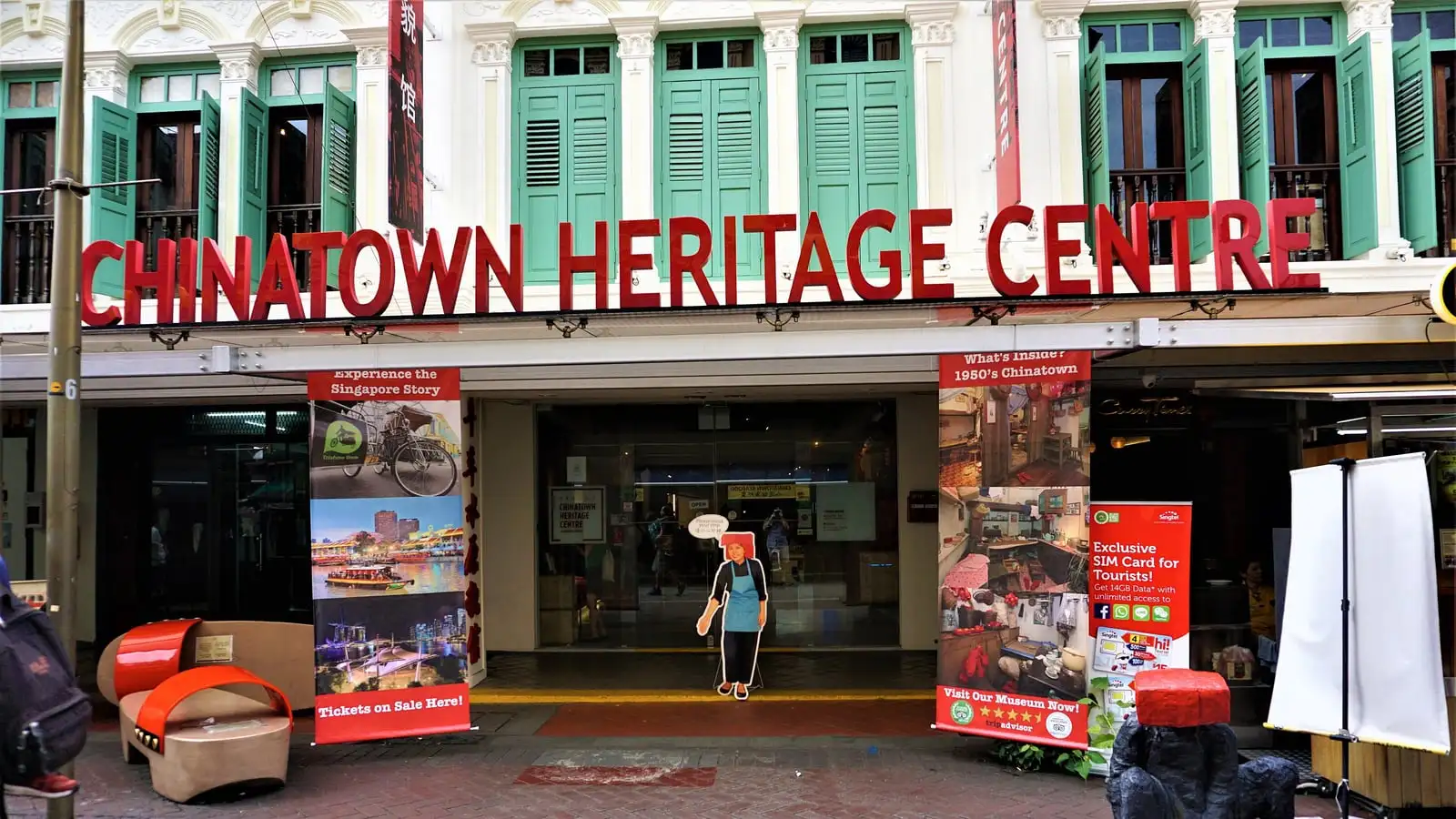
Three restored shophouses on Pagoda Street, with 1950s interiors rebuilt room by room. It is the only museum in Singapore that shows you how eight people shared a cubicle, and it is better than it sounds.
- Last checked: 29 August 2026
- 2 ticket options tracked
- Not the official site This is not the official website Singapore Tickets Guide is an independent travel guide. We do not own, run or represent any attraction on this site and we do not issue tickets ourselves. Booking links go to Headout, an authorised reseller, and we may earn a commission. For official information, always use the operator’s own website. About this site →
Live inventory
Tickets and passes available right now
Live options from our booking partner. Prices update automatically.
 Most booked
 Indian Heritage Centre
$7.87From · per person

Chinatown Heritage Centre Admission Tickets
$19.66From · per person
Prices shown are the current lowest listed by our booking partner and can change.Last checked: .
| Cheapest ticket right now | From $19.66Admission via our booking partner |
|---|---|
| Opening hours | Daily 10:00–20:00Source: Chinatown Heritage Centre. Last entry 19:15. |
| The building | Three restored shophouses, three levels48 Pagoda Street. The 1950s interiors are described by the operator as "meticulously recreated". |
| Under 3s | FreeChildren below three years old enter at no charge. |
| Resident rates | Yes, with IDVerification of ID is required for residents, children, seniors and PWD concession card holders. |
| Time to allow | About an hourA small, dense museum. An hour covers it properly without rushing. |
| Nearest station | Chinatown (NE4/DT19), Exit AAbout a one-minute walk. This is the most accessible museum in the city. |
| Address | 48 Pagoda Street, Singapore 059207 |
Opening hours and on-the-gate prices come from the operator’s official website. Always re-check before you travel. Official site: Chinatown Heritage Centre
Ticket comparison
Which ticket should you buy?
Chinatown Heritage Centre admission
$19.66 From · per person
One focused hour on how people actually lived in these buildings.
- Three restored shophouses across three levels
- Recreated 1950s interiors, room by room
- Open until 20:00, later than any national museum
Resident, child, senior and concession rates require ID verification. Under-3s are free.
Check pricesLowest price
Indian Heritage Centre
$7.87 From · per person
The other community museum, ten minutes north.
- The permanent gallery, Indians in Singapore: Past & Present
- Free for Singapore citizens and PRs
- Closed on Mondays, unlike this one
The natural pairing. Two communities, two neighbourhoods, one afternoon.
Check pricesGuided Michelin and local hawker food tour
$85.74 From · per person
Extending the same neighbourhood into what people eat.
- Chinatown Complex, Maxwell and Hong Lim food centres
- Nine to ten tastings over 3.5 hours
- Starts at Chinatown MRT, two minutes away
Runs in the morning from the same station. The museum in the afternoon closes the loop well.
Check pricesWalk down Pagoda Street and you are walking past restored shophouses full of souvenir stalls. At number 48, three of them have been restored the other way — not into shops, but back into what they were.
The Chinatown Heritage Centre occupies three shophouses across three levels, with 1950s interiors recreated room by room. It is open daily 10:00 to 20:00, last entry 19:15, and it is roughly a one-minute walk from Chinatown MRT Exit A.
It is the single most useful hour you can spend in Chinatown, and most visitors walk past it.
What makes it different from the national museums
Singapore has excellent museums. The National Museum tells you how the country came to exist. The Asian Civilisations Museum tells you where its population came from. The Peranakan Museum tells you what one community made.
None of them tell you what the rooms were like.
This one does, and it does it by rebuilding them. The cubicle where a family lived in a partitioned few square metres. The shared kitchen. The narrow stair. The ground-floor trades — the tailor, the letter-writer, the medicine shop — that operated at street level while dozens of people lived above.
The effect is specific and physical in a way a display case cannot be. You come out of it and the street outside reads completely differently, because you now know what is behind those facades.
Who pays what
This is a private museum, not a National Heritage Board one, so the free-for-citizens rule that applies at the ACM, the National Museum and the Peranakan Museum does not apply here.
There are separate adult, child, senior, resident and concession rates, and ID verification is required for the resident, child, senior and PWD concession categories. Children below three years old enter free.
Booking online is usually cheaper than the counter rate — check the live prices above against the gate.
The 20:00 close is the underrated fact
Every national museum in Singapore closes at 19:00 or earlier. Most close at 18:00.
This one is open until 20:00, with last entry at 19:15.
That single detail makes it the most schedulable museum in the city. It slots into an evening after a full day elsewhere, it works after the Gardens by the Bay conservatories close, and the final two hours are genuinely quiet because most people do not think of a museum at 18:30.
If your days are full and your evenings are not, this is the museum to put in one.
The Chinatown afternoon it belongs to
An hour here is a component, not a day. It fits into a specific and very good half-day.
The full sequence, all within a few hundred metres:
- Morning — a hawker food tour through Chinatown Complex and Maxwell, which starts at Chinatown MRT
- Midday — Buddha Tooth Relic Temple on South Bridge Road, free
- Early afternoon — Sri Mariamman Temple, Singapore's oldest Hindu temple, free, and one street from the museum
- Late afternoon — the Chinatown Heritage Centre, an hour
- Evening — Chinatown Food Street or back to Maxwell
Everything on that list except the food and the museum ticket is free.
Timing
10:00 or after 18:00 are the quiet windows. The middle of the day is when the tour groups working Pagoda Street come through.
An hour is the honest estimate. Three floors of shophouse is not a big museum, and stretching it does not improve it.
Weekdays over weekends, though this is a smaller effect here than at the national museums.
Avoid the fortnight around Chinese New Year if you want quiet. Chinatown during that period is one of the busiest places in Singapore — spectacular, but not for a considered museum visit.
How to save
Book online rather than at the door. The counter rate is the highest.
Bring ID if you qualify. Resident, senior, child and concession rates all require verification, and they are not available without it.
Pair it with free Chinatown. The Buddha Tooth Relic Temple, Sri Mariamman Temple, the shophouse streets and the murals cost nothing, and the museum makes all of them read better.
Do not buy a city pass for this. It is one of the cheapest attractions in Singapore and passes are priced around theme parks.
Eat at Chinatown Complex or Maxwell, two and five minutes away respectively — among the best and cheapest food in the country, and the correct end to this visit.
How to get there
Chinatown MRT (NE4/DT19), Exit A — about a one-minute walk. On the North East and Downtown lines, so it is straightforward from almost anywhere in the city.
The address is 48 Pagoda Street, Singapore 059207.
What is nearby
Everything in Chinatown, on foot. The Buddha Tooth Relic Temple and Sri Mariamman Temple are both free and both within three minutes. Chinatown Complex food centre is two minutes; Maxwell Food Centre is five.
For the museum version of the same idea in another community, the Indian Heritage Centre is ten minutes north in Little India and free for citizens and PRs. The Peranakan Museum in the Bras Basah cluster completes the set.
FAQ
Frequently asked questions
What is the Chinatown Heritage Centre?
A museum inside three restored shophouses at 48 Pagoda Street, with 1950s interiors recreated across three levels. Rather than displaying objects in cases, it rebuilds the rooms — the cubicles, the shared kitchen, the trades worked on the ground floor — so you walk through a version of how early Chinatown residents actually lived.
What are the opening hours?
Daily from 10:00 to 20:00, with last entry at 19:15. That evening close makes it the most flexible museum in the city — every national museum shuts at 19:00 or earlier.
How much are tickets?
There are separate adult, child, senior, resident and concession rates, and ID verification is required for the resident, child, senior and PWD concession categories. Children below three years old enter free. Live prices are in the ticket list above.
How long do you need?
About an hour. It is a small and dense museum across three floors of shophouse, and an hour lets you read it properly rather than walking through it.
Is it worth visiting?
If you have walked around Chinatown wondering what these buildings were actually like inside, this answers it directly and it is the only place in Singapore that does. The recreated cubicles — where whole families lived in a partitioned few square metres — are the part people remember.
How does it compare with the national museums?
It is smaller, more specific and privately run rather than part of the National Heritage Board, so there is no free-for-citizens rule here. What it does better than any of them is domestic detail: the National Museum tells you the country's story, this tells you what one street's rooms smelled like.
Is it good for children?
Reasonably, from about eight upwards. The recreated rooms are more engaging for children than display cases would be, and an hour is a manageable length. Younger children will get more out of the Science Centre or the Lee Kong Chian museum.
When is it quietest?
Early morning at 10:00, and after about 18:00. The 20:00 close means the last two hours are genuinely quiet, which very few museums anywhere can offer.
Related guides