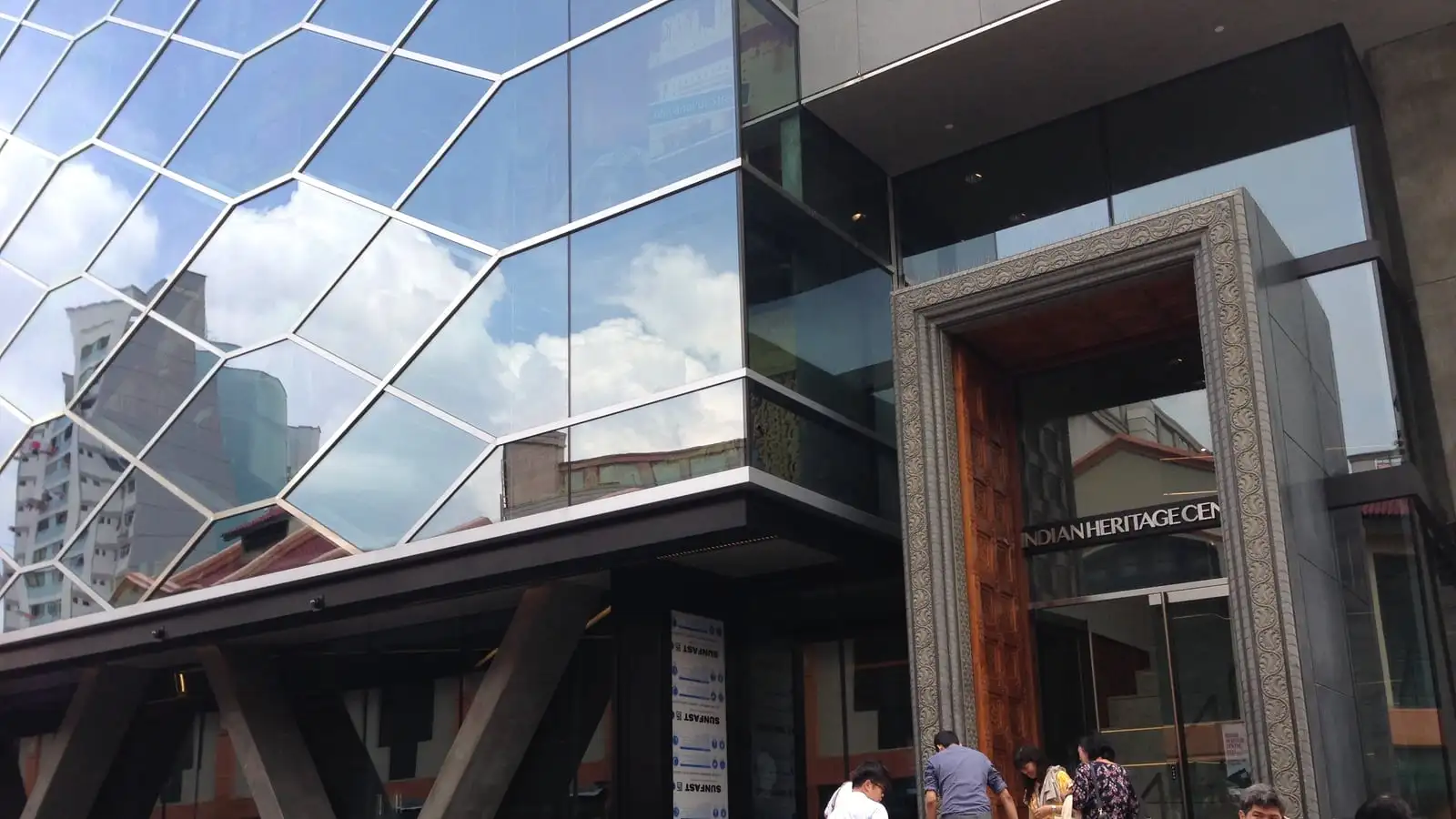
Independent visitor guide
Indian Heritage Centre: free for residents, and the best hour in Little India
A National Heritage Board museum on Campbell Lane tracing the Indian and South Asian communities across Southeast Asia, not only Singapore. Free for citizens and PRs, closed on Mondays, and small enough to do properly in an hour.
- Last checked: 29 August 2026
- 2 ticket options tracked
- Not the official site This is not the official website Singapore Tickets Guide is an independent travel guide. We do not own, run or represent any attraction on this site and we do not issue tickets ourselves. Booking links go to Headout, an authorised reseller, and we may earn a commission. For official information, always use the operator’s own website. About this site →
Live inventory
Tickets and passes available right now
Live options from our booking partner. Prices update automatically.
 Most booked
 Indian Heritage Centre
$7.87From · per person

Chinatown Heritage Centre Admission Tickets
$19.66From · per person
Prices shown are the current lowest listed by our booking partner and can change.Last checked: .
| Cheapest ticket right now | From $7.87Admission via our booking partner |
|---|---|
| Admission | Free for citizens and PRsSource: Indian Heritage Centre. Other nationalities pay general admission. |
| Opening hours | 10:00–18:00, closed MondaysThe Monday closure is the detail that catches visitors out — most Singapore museums open seven days. |
| Permanent gallery | Indians in Singapore: Past & PresentThe standing exhibition, covering the community's history and its place in the region. |
| Scope | Southeast Asia, not just SingaporeThe centre traces the history of Indian and South Asian communities across the Southeast Asian region. |
| Time to allow | About an hourSmall and focused. Ninety minutes if you read every label. |
| Nearest station | Little India (NE7/DT12) or Rochor (DT13)Both about five minutes on foot. Campbell Lane runs off Serangoon Road. |
| Address | 5 Campbell Lane, Singapore 209924 |
Opening hours and on-the-gate prices come from the operator’s official website. Always re-check before you travel. Official site: Indian Heritage Centre
Ticket comparison
Which ticket should you buy?
Lowest price
Indian Heritage Centre admission
$7.87 From · per person
An hour on the community that built a large part of this city.
- The permanent gallery, Indians in Singapore: Past & Present
- The regional South Asian framing
- Free for Singapore citizens and permanent residents
Closed Mondays. Other nationalities pay general admission; special exhibitions may be ticketed separately.
Check pricesChinatown Heritage Centre
$19.66 From · per person
The other community museum, twenty minutes south.
- Three restored shophouses with 1950s interiors
- Open daily until 20:00
- About an hour
The natural pairing across two neighbourhoods. Neither is a National Heritage Board free-entry museum in the same way — check the rates for each.
Check pricesAsian Civilisations Museum
$11.80 From · per person
The regional context, at a much larger scale.
- Pan-Asian collections including the Tang Shipwreck
- Two hours at Empress Place
- Free for citizens and PRs
Where the trade routes that brought these communities here are set out properly.
Check pricesLittle India is the part of Singapore that most obviously refuses to be tidy. Serangoon Road on a Sunday evening is loud, crowded, fragrant and completely unlike the rest of the city.
The Indian Heritage Centre sits one street off it, on Campbell Lane, and it explains why.
It is a National Heritage Board museum, free for Singapore citizens and permanent residents, open 10:00 to 18:00 and closed on Mondays.
What it actually covers
The permanent gallery is Indians in Singapore: Past & Present, and the framing is broader than the title suggests: the centre traces the history of Indian and South Asian communities across the Southeast Asian region, not only in Singapore.
That regional scope is what makes it worth an hour rather than twenty minutes. South Asian movement into this part of the world long predates the colonial period — traders, then indentured and contract labour, then merchants, professionals and civil servants — and the Singapore story only makes sense as one chapter of it.
Concretely, the gallery covers where people came from and why, the trades and occupations they took up, the community institutions they built, the temples and the businesses along Serangoon Road, and the political and cultural role of Indian Singaporeans through independence and after.
The Monday closure
Closed on Mondays. This is the single most practical fact on the page.
Almost every other museum in Singapore opens seven days a week. The National Museum, the ACM, the Peranakan Museum and the Chinatown Heritage Centre all do. This one does not, and so does the Science Centre — the two Monday closures in Singapore's museum calendar.
If your Monday is your museum day, plan around it.
Who pays
The standard National Heritage Board rule:
Free for Singapore citizens and permanent residents. Other nationalities pay general admission. Special exhibitions may be ticketed separately for everyone, at a lower resident rate.
At non-resident prices this is still one of the cheapest museums in the country, and the live rate is in the ticket list above.
The Little India afternoon it belongs to
An hour here is the opening move, not the whole day. The neighbourhood around it is free and does most of the work.
Sri Veeramakaliamman Temple on Serangoon Road — one of the oldest and most vivid Hindu temples in Singapore, free to enter, and considerably more affecting after you have spent an hour learning who built it.
Tekka Centre — the wet market and hawker centre at the Little India MRT end. The market downstairs is the most interesting food market in central Singapore and the hawker centre upstairs is excellent and cheap.
The shophouses along Serangoon Road, Dunlop Street and Kerbau Road, including the Tan Teng Niah house — a restored Chinese villa painted in saturated colours, and the single most photographed building in the district.
Mustafa Centre, which is open 24 hours and is an experience rather than a shop.
All of that is free. The museum ticket is the only cost in the afternoon.
Timing
Weekday mornings from 10:00 are quietest, in both the museum and the neighbourhood.
Sundays are the neighbourhood's day. Little India becomes the main gathering point for Singapore's South Asian workforce, and Serangoon Road is transformed — genuinely worth seeing, and not the day for a considered museum hour.
Deepavali turns the whole district into a light installation for weeks. Spectacular, crowded, and the best time to be here if you do not mind the crush.
Closed Mondays, again, because it is the mistake people make.
An hour is the honest estimate, ninety minutes if you read everything.
How to save
Check whether you are already free. Citizens and permanent residents pay nothing.
Skip special exhibitions on a first visit. The permanent gallery is the reason to come.
Do the neighbourhood on foot. Tekka Centre, the temples and the shophouse streets are all free and all within ten minutes.
Eat at Tekka Centre, not at a restaurant on Serangoon Road. It is upstairs from the market, it is cheap, and it is better.
Do not buy a city pass for museums. Singapore's museums are among its cheapest attractions.
How to get there
Little India MRT (NE7/DT12) and Rochor (DT13) are both about five minutes on foot. Campbell Lane runs off Serangoon Road, one street back from the main strip.
Farrer Park (NE8) is the alternative from the north.
The address is 5 Campbell Lane, Singapore 209924.
What is nearby
All of Little India, free and immediately outside: Sri Veeramakaliamman Temple, Tekka Centre, the Tan Teng Niah house, and Mustafa Centre.
For the museum equivalent in another community, the Chinatown Heritage Centre is twenty minutes south and shows recreated shophouse interiors rather than a gallery. The Bras Basah cluster — the National Museum, the Peranakan Museum and National Gallery Singapore — is about fifteen minutes' walk south, and the Asian Civilisations Museum at Empress Place sets out the trade routes that brought these communities here in the first place.
FAQ
Frequently asked questions
Is the Indian Heritage Centre free?
Free for Singapore citizens and permanent residents, in line with National Heritage Board policy. Other nationalities pay general admission, and special exhibitions may be ticketed separately for everyone.
What are the opening hours?
10:00 to 18:00, and it is closed on Mondays. That Monday closure catches people out, because most Singapore museums open seven days a week — check before you build a Monday around Little India.
What is in the permanent gallery?
The standing exhibition is titled Indians in Singapore: Past & Present, and it traces the history of the Indian and South Asian communities across the Southeast Asian region rather than only in Singapore. That regional framing is the thing it does that no other museum here does.
How long do you need?
About an hour, or ninety minutes if you read carefully. It is a small, focused museum, which makes it a good second stop or a good way to start a Little India afternoon.
Is it worth visiting?
If you are spending any time in Little India, yes. The neighbourhood is one of the most immediately vivid parts of Singapore, and an hour here explains who built it and why they came — which turns a walk through Serangoon Road from a sensory experience into a legible one.
How does it compare with the Chinatown Heritage Centre?
Different approaches. The Chinatown Heritage Centre rebuilds interiors so you walk through recreated 1950s rooms. This one is a conventional gallery museum with objects, documents and a regional argument. Doing both in a day is comfortable and the contrast is the point.
Is it good for children?
Moderately. It is small enough not to exhaust them and visually rich, but it is a text-led history museum. For a family day, Little India itself — the wet market, the shophouses, Sri Veeramakaliamman Temple — does more of the work.
When is it quietest?
Weekday mornings from 10:00. Little India as a whole is busiest on Sundays, when it becomes the main gathering point for Singapore's South Asian workforce, and the museum follows the neighbourhood.
Related guides