Operator profile
Food Playground review: three hours, three dishes and a recipe you take home
A cooking school in a restored shophouse on Sago Street, running one three-hour class daily with a menu that changes by day of the week. Established 2012, and the only entry on this page where you leave able to make the food yourself.
- Last checked: 29 August 2026
- Not the official site This is not the official website Singapore Tickets Guide is an independent travel guide. We do not own, run or represent any attraction on this site and we do not issue tickets ourselves. Booking links go to Headout, an authorised reseller, and we may earn a commission. For official information, always use the operator’s own website. About this site →
Profile
Operator profile
| Established | 2012One of the longest-running cooking schools aimed at visitors in Singapore. |
|---|---|
| Class times | Daily, 09:30–12:30Three hours, Monday to Sunday. One class per day rather than a rolling schedule. |
| Price | S$120 per personFor groups of two or more. Solo bookings are listed at S$150 nett per class. |
| Group size | Minimum 2, maximum 10Participants cook in pairs, which is why two is the working minimum. |
| Address | 24A Sago Street, Singapore 059020A restored shophouse in Chinatown, a few minutes from Chinatown MRT. |
| What you cook | Three dishes, menu by dayNasi lemak with prawn sambal and kueh dadar on Monday; curry chicken with roti jala and ondeh ondeh on Tuesday and Saturday; nyonya laksa with spring rolls and hoon kueh on Wednesday and Sunday. |
| Awards claimed | Tripadvisor Best of the Best 2020–2024The operator also cites a 2013 Singapore Tourism Award, a 2018 Global Culinary Travel Award and the Singapore Service Excellence Medallion 2015. |
Licence numbers, tour names and published prices come from the operator’s own website. Official site: Food Playground
Line-up
The tours they are known for
-
Cultural Cooking Class
Daily 09:30–12:30 · 3 hrs · S$120 · max 10
The single product. Three dishes cooked hands-on in pairs, then eaten together as a communal lunch. Recipes and photographs are emailed afterwards.
-
The Monday menu
Nasi lemak, prawn sambal, kueh dadar
Coconut rice, a chilli sambal that is the backbone of Malay cooking here, and a pandan crêpe rolled around palm sugar and coconut.
-
The Wednesday and Sunday menu
Nyonya laksa, spring rolls, hoon kueh
The one to aim for if you can choose your day. Laksa is the dish most visitors want to be able to make and the one hardest to reverse-engineer at home.
-
Private classes and team building
On request
The operator also runs corporate team building, private cooking parties and holiday classes for children.
Every other entry on this page ends when the tour does. This one ends with an email containing three recipes.
Food Playground has been running since 2012 out of a restored shophouse at 24A Sago Street in Chinatown, and it does exactly one thing: a three-hour hands-on cooking class, daily, 09:30 to 12:30, capped at ten people, at S$120 per person.
What happens in three hours
You cook three dishes, in pairs, and then eat them together as a communal lunch. Recipes and photographs arrive by email afterwards.
The menu is set by the day of the week, which is unusually helpful because it means you can choose:
| Day | What you cook |
|---|---|
| Monday | Nasi lemak with prawn sambal, and kueh dadar |
| Tuesday and Saturday | Curry chicken with roti jala, and ondeh ondeh |
| Wednesday and Sunday | Nyonya laksa with spring rolls, and hoon kueh |
Aim for Wednesday or Sunday if you can. Laksa is the dish most visitors want to be able to reproduce and the one that is hardest to work out from memory — a coconut and dried-shrimp broth built on a rempah that takes real instruction to get right.
The Monday menu is the other strong one. Sambal is the backbone of a large part of the cooking in this region, and knowing how to build one properly changes more of your home cooking than a single dish does.
The price, honestly
S$120 for three dishes sits awkwardly next to a food tour that hands you nine to thirteen tastings for roughly the same money. Anyone comparing on volume will conclude this is expensive, and on volume they are right.
The comparison is the wrong one.
A food tour answers "where should I eat in Singapore?" — which is worth a lot for the remaining four days of your trip and worth nothing after you fly home.
A cooking class answers "how do I make this?" — which is worth nothing on your trip and something every time you cook afterwards.
If you have time for both, do the tour first. Understanding what laksa is supposed to taste like makes the class considerably more useful, and you will have opinions about your own version.
Solo travellers should note the pricing structure: S$150 nett rather than the per-person rate, because participants cook in pairs and a single booking occupies a station.
Why the shophouse matters
The class is in a restored shophouse in Chinatown, and that is not incidental.
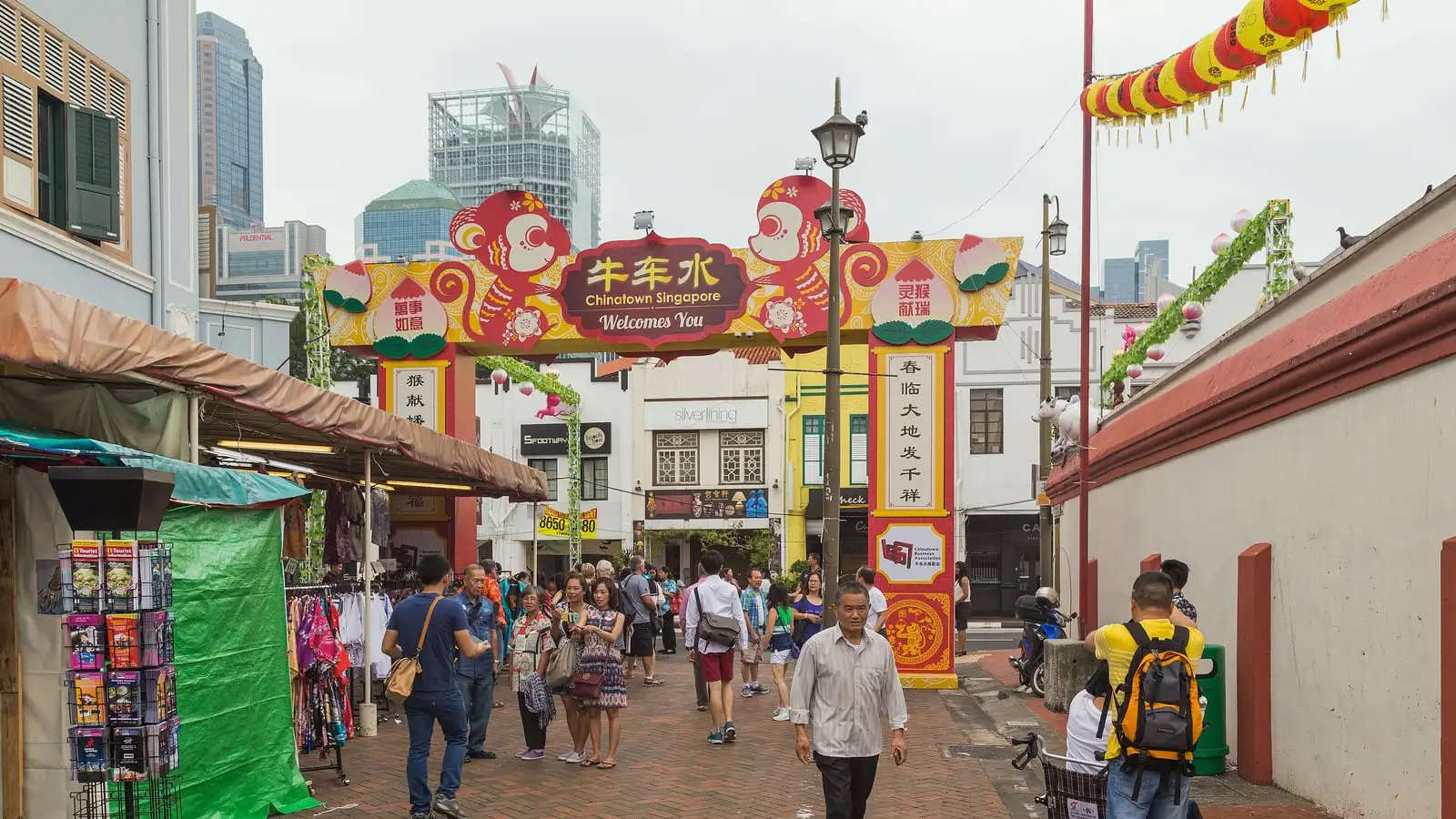
Singapore's cooking traditions were built in exactly these buildings — narrow, deep, with the kitchen at the back and the family upstairs. Learning to make nyonya laksa in a Sago Street shophouse rather than in a hotel demonstration kitchen puts the food in the place it came from, and the Chinatown context is right outside the door when you finish at 12:30.
The Chinatown Heritage Centre on Pagoda Street is a five-minute walk and covers how people actually lived in these shophouses. Doing that in the afternoon after cooking in one in the morning is one of the better-designed days available in central Singapore.
Who should book it
Book it if you cook at home, if you want something from Singapore that is not a photograph, or if you are travelling with someone who is more interested in food than in sights.
Book it if the weather has broken. Three hours indoors and air-conditioned during a wet-season morning is a considerably better use of the day than a damp walking tour.
Book something else if you have a short trip and food breadth matters more than depth, or if you want an afternoon or evening activity — there is one class a day and it takes the whole morning.
Practical notes
One class a day, 09:30 start. It claims your morning. Plan the afternoon in Chinatown rather than across town.
Minimum two people, maximum ten. Book early for the days with the menu you want, since a cap of ten fills quickly in high season.
Dietary restrictions are accommodated but tell them at booking, not on the day.
No experience needed. All skill levels are stated as welcome, and the dishes are chosen to be reproducible in a normal kitchen.
Come hungry. The communal lunch at the end is a full meal, and it is the food you made.
How it compares
Against Monster Day Tours — S$109 for 3.5 hours and nine to ten hawker tastings across three centres. Breadth against depth, at almost the same price. Different products for different weeks.
Against Hello! Singapore Tours — six hours and 13-plus tastings across four neighbourhoods. That is the maximalist food day; this is the one where you do the cooking.
Against Tribe Tours — Tribe's food sustainability tour and this class both take a specific angle on Singapore food rather than a survey. Either would be a better second food booking than a second general tour.
Balance
The verdict
What they do well
- You leave able to cook the food. Nothing else on this page changes what you can do after the trip.
- The class caps at ten and people cook in pairs, so this is genuinely hands-on rather than a demonstration you watch.
- The menu rotates by day of the week and is published in advance, so you can pick the day that gives you the dish you actually want.
- Recipes and photographs are emailed afterwards, which is the difference between a nice morning and something you use again.
What to check before booking
- S$120 for three dishes is not cheap next to a food tour that gives you nine to thirteen tastings for a similar figure. You are buying skill, not volume.
- Solo travellers pay S$150 nett rather than the per-person rate, because participants cook in pairs.
- One class a day, at 09:30, seven days a week. It takes the whole morning and there is no afternoon alternative.
- The menu is fixed by the day you book. If you want laksa specifically, you have to book a Wednesday or a Sunday.
FAQ
Frequently asked questions
How much is a Food Playground cooking class?
S$120 per person for groups of two or more, and S$150 nett for a solo booking. The class runs three hours from 09:30 to 12:30 and includes the cooking, a communal lunch of what you made, and recipes emailed afterwards.
What do you actually cook?
Three dishes, with the menu set by the day of the week. Monday is nasi lemak with prawn sambal and kueh dadar; Tuesday and Saturday are curry chicken with roti jala and ondeh ondeh; Wednesday and Sunday are nyonya laksa with spring rolls and hoon kueh. Check the current day menu before booking.
Is it hands-on or a demonstration?
Hands-on. Participants cook in pairs, which is why the minimum booking is two people and why a solo booking is priced differently. The class caps at ten, so this is a working kitchen rather than a lecture.
Where is it?
24A Sago Street, Singapore 059020, in a restored shophouse in Chinatown. It is a few minutes on foot from Chinatown MRT on the North East and Downtown lines.
Do I need cooking experience?
No. The operator states that all skill levels are welcome and that dietary restrictions can be accommodated. The dishes are chosen to be reproducible at home rather than to be technically demanding.
Is a cooking class better than a food tour?
They answer different questions. A food tour teaches you where to eat in Singapore, which is useful for the rest of your trip. A cooking class teaches you to make three dishes, which is useful for the rest of your life. If you have time for both, do the tour first — it makes the class land better.
Which day should I book?
Wednesday or Sunday, if the choice is yours, because that is the nyonya laksa menu. Laksa is the dish most visitors want to be able to make and the hardest to work out at home without a recipe.
Can children join?
The operator runs dedicated kids' holiday cooking classes separately, which is the better route for younger children. For the main cultural class, ask directly, since it involves a working kitchen and a three-hour session.
Compare
More operators
Related guides