Independent visitor guide
Singapore Botanic Gardens: free, UNESCO-listed, and the one part that charges
A UNESCO World Heritage Site that costs nothing to enter, open from five in the morning. One garden inside it charges admission, and it holds the largest orchid display in the world.
- Last checked: 28 August 2026
- 0 ticket options tracked
- Not the official site This is not the official website Singapore Tickets Guide is an independent travel guide. We do not own, run or represent any attraction on this site and we do not issue tickets ourselves. Booking links go to Headout, an authorised reseller, and we may earn a commission. For official information, always use the operator’s own website. About this site →
| The Gardens | Free, and open 5am–midnight82 hectares, no ticket, no booking. The only paid part is the National Orchid Garden inside it. |
|---|---|
| UNESCO status | World Heritage Site since 2015The only tropical botanic garden on the list. |
| Founded | 1859, on this siteBy the Agri-Horticultural Society. Its rubber research reshaped the region's economy. |
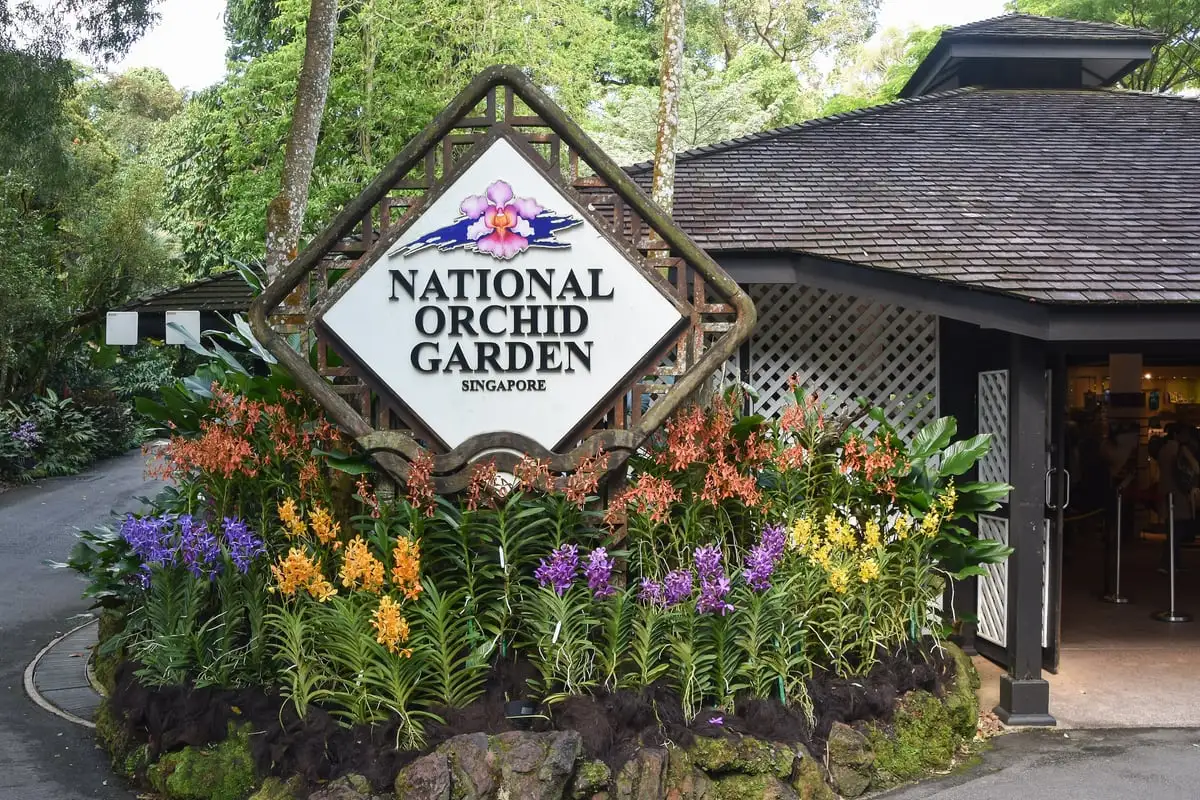
| National Orchid Garden | Charged separatelyAround 1,200 orchid species — the largest display of its kind. Check the current rate with NParks. |
| Time to allow | 2–3 hoursAn hour for the Orchid Garden alone; a full morning to walk the length of the Gardens. |
| Nearest station | Botanic Gardens MRT (CC19/DT9)The Bukit Timah gate is at the station. Napier (TE12) serves the Tyersall entrance at the other end. |
| Address | 1 Cluny Road, Singapore 259569 |
Opening hours and on-the-gate prices come from the operator’s official website. Always re-check before you travel. Official site: National Parks Board
Ticket comparison
Which ticket should you buy?
The Gardens themselves
Everyone. This is the main attraction and it is free.
- 82 hectares of tropical garden, open 5am to midnight
- The Rain Forest, Swan Lake, the Bandstand and the Learning Forest
- No ticket, no booking, no queue
Free entry is not a promotion. It has always been free and it is the reason locals use it daily.
National Orchid Garden
Anyone who wants the orchids specifically — and they are the reason many people come.
- Around 1,200 orchid species and thousands of hybrids
- The VIP Orchid Garden, where hybrids are named after visiting dignitaries
- The cool house, which is a genuine relief at midday
The only ticketed part of the Gardens. Rates and resident discounts are published by NParks.
A guided garden tour
Visitors who want the rubber and spice history rather than only the planting.
- A guide through the Gardens and usually the Orchid Garden
- Context on Ridley, rubber and the region's economic history
- Typically two to three hours
Sold by our secondary booking partner, since the Gardens themselves have no entry ticket to sell.
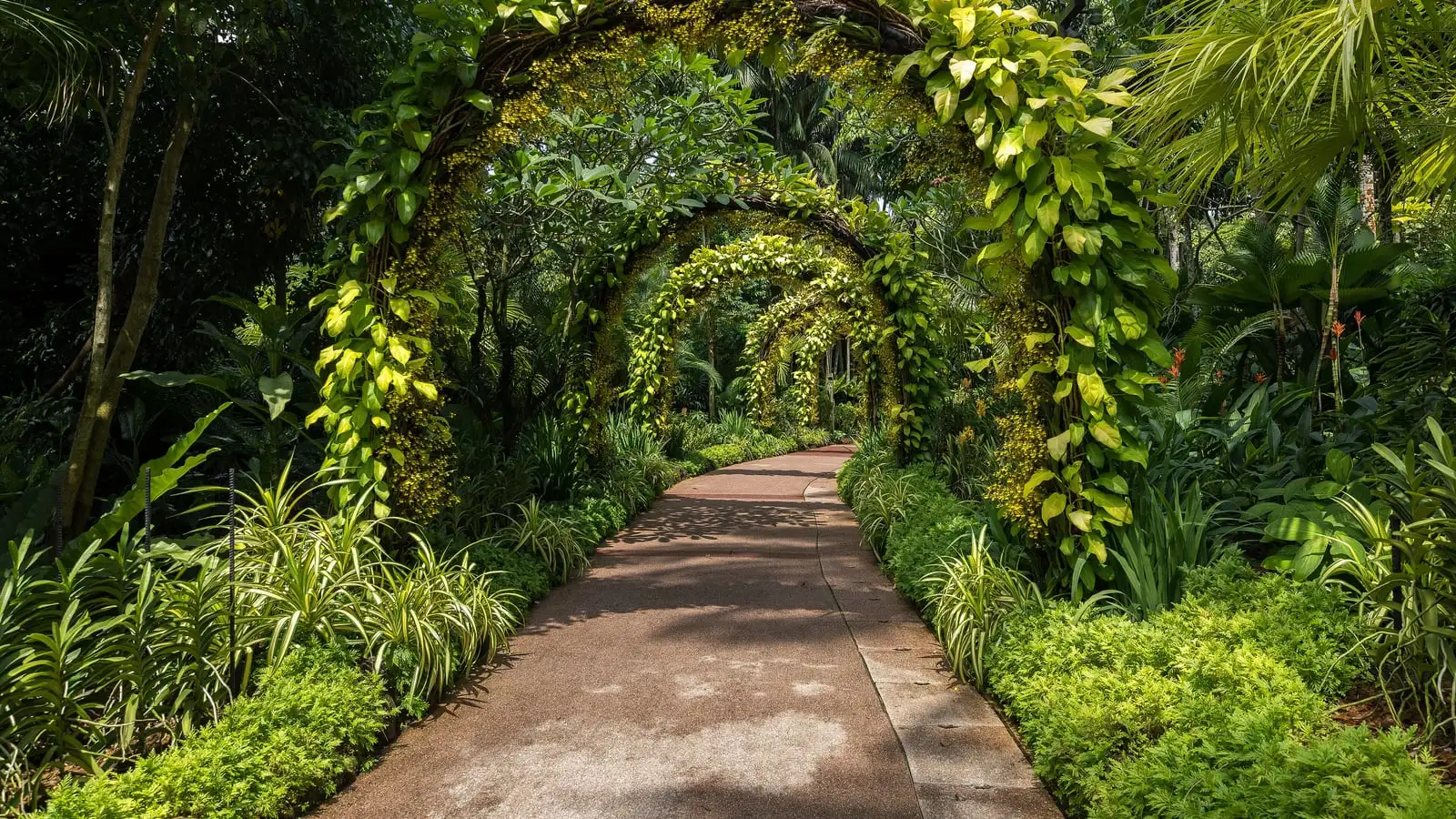
The Singapore Botanic Gardens is 82 hectares of tropical garden on the edge of the Orchard Road shopping district, founded on this site in 1859 and inscribed as a UNESCO World Heritage Site in 2015 — the only tropical botanic garden on the list.
It is free. It has always been free. It opens at 5am and closes at midnight, which is not a tourist opening time — it is the timetable of a park that residents use every day.
What costs money, and what does not
Free: everything. The Rain Forest — a six-hectare patch of primary rainforest older than the Gardens themselves — Swan Lake, the Bandstand, the Learning Forest, the Healing Garden, the Ginger Garden, the Botany Centre, the lawns, and the whole 82 hectares.
Ticketed: the National Orchid Garden alone, which sits in the middle of the Gardens.
That is the entire pricing structure, and it is worth stating plainly because a lot of listings sell "Botanic Gardens tickets" that are either Orchid Garden admission or a guided tour of something free.
The Orchid Garden
Around 1,200 orchid species plus thousands of hybrids, which makes it the largest orchid display of its kind anywhere. Singapore is a major exporter of cut orchids and the national flower is a hybrid — Vanda Miss Joaquim — so this is not a decorative collection, it is the country's horticultural speciality on display.
Two things inside it are worth the ticket on their own. The VIP Orchid Garden names hybrids after visiting heads of state and celebrities, which is either charming or absurd depending on your mood. The cool house is held at a mist-forest climate and is the single most comfortable room in the Gardens at midday.
Allow about an hour. Rates and resident discounts are published by NParks, and this is the one figure here that moves.
Why UNESCO listed it
Not for the planting. For the rubber.
The Gardens' first scientific director, Henry Nicholas Ridley, worked out a herringbone tapping technique that let a rubber tree be harvested repeatedly without killing it — a method still in use — and then spent years persuading regional planters to switch to the crop. They eventually did. By the 1920s the Malayan peninsula was producing roughly half the world's latex.
That is the reason a botanical garden in a small city-state carries the same status as the Taj Mahal: it is one of the places where a scientific institution visibly reorganised a regional economy. The listing came in 2015.
Timing is everything
Go at opening, or close to it. The Gardens open at 5am, and the first two hours are the coolest, quietest part of any Singapore day. This is when the place is at its best and at its most local — runners, tai chi groups, people with coffee.
By 11am it is hot, and the value of the Gardens shifts from walking to shade. The Rain Forest and the Ginger Garden are the cool parts; the open lawns are not.
Late afternoon into dusk is the second window. The Gardens stay open until midnight, and the Bandstand and Swan Lake in the last light are worth the walk. Note that the Orchid Garden closes considerably earlier than the Gardens around it.
Weekend mornings are busy with families and joggers, but at 82 hectares it never feels crowded — this is not a place where crowds are the constraint.
Which gate to use
The Gardens run roughly north to south and the gate you pick decides your walk.
Botanic Gardens MRT (CC19/DT9) opens onto the Bukit Timah gate at the northern end — closest to the Learning Forest, the Rain Forest and the Eco-Lake. This is the practical arrival for most visitors.
The Tanglin gate at the southern end is the historic entrance, closest to Swan Lake, the Bandstand and the Botany Centre, and about ten minutes' walk from Orchard Road.
Napier (TE12) on the Thomson-East Coast Line serves the Tyersall side.
The National Orchid Garden sits between them, so any gate works — the difference is what you see first.
How to save
Everything except the Orchid Garden is free. If the budget is tight, that is not a compromise; it is the main attraction.
Check the resident rate at the Orchid Garden. Singapore residents pay less, and concessions exist for children, students and seniors.
Bring a picnic. The lawns are open, picnicking is normal, and the cafés at the gates are priced for a captive audience.
Do not buy a guided tour on a first visit unless the rubber and spice history is specifically what you want. The Gardens are signposted, walkable and self-explanatory.
Combine with Dempsey rather than with another garden. Museum of Ice Cream and the Dempsey restaurant cluster are across Holland Road, which makes a morning here plus an afternoon there a natural pairing — and half of it costs nothing.
How to get there
Botanic Gardens MRT (CC19 on the Circle Line, DT9 on the Downtown Line) puts you at the Bukit Timah gate. This is the simplest arrival.
Napier (TE12) on the Thomson-East Coast Line serves the Tyersall entrance.
On foot from Orchard Road it is about ten to fifteen minutes to the Tanglin gate — one of the few walks in Singapore where you go straight from a shopping district into primary rainforest.
The address is 1 Cluny Road, Singapore 259569.
What is nearby
Dempsey Hill is across Holland Road: a converted army barracks now full of restaurants and galleries, with the Museum of Ice Cream among them.
Orchard Road is a fifteen-minute walk from the Tanglin gate, which makes the Gardens the standard escape from it.
For a contrast rather than a repeat, Gardens by the Bay is the engineered opposite of this place — conservatories, Supertrees and a light show against 165 years of botanical institution.
FAQ
Frequently asked questions
Are the Singapore Botanic Gardens free?
Yes. The Gardens are free to enter and open from 5am to midnight every day. The only part that charges admission is the National Orchid Garden inside them.
How much is the National Orchid Garden?
It is ticketed separately, with a lower rate for Singapore residents and concessions for children, students and seniors. NParks publishes the current rates — check them before you go, since this is the one figure at the Gardens that changes.
How long do you need?
Two to three hours for a proper visit. The Orchid Garden alone takes about an hour. Walking the full length of the Gardens from the Bukit Timah gate to the Tyersall end is a comfortable morning.
What is the best time to visit?
Early. The Gardens open at 5am and the first two hours are the coolest and quietest part of any Singapore day — this is when residents run, walk and practise tai chi here. By 11am it is hot and the shade is doing a lot of work.
Why is it a UNESCO World Heritage Site?
For its role in the region's economic and scientific history as much as its planting. Its first scientific director, Henry Nicholas Ridley, perfected a rubber-tapping technique still used today and persuaded regional planters to adopt the crop. By the 1920s the Malayan peninsula produced around half the world's latex. It was inscribed in 2015 and remains the only tropical botanic garden on the list.
Which entrance should I use?
Botanic Gardens MRT (CC19/DT9) opens directly onto the Bukit Timah gate at the northern end, which is closest to the Learning Forest and the Rain Forest. The Tanglin gate at the southern end is closest to Swan Lake and the Bandstand. The Orchid Garden sits in the middle, so either works.
Is it worth visiting if I have already seen Gardens by the Bay?
They are completely different. Gardens by the Bay is engineered spectacle — conservatories, Supertrees, a light show. The Botanic Gardens is a 165-year-old working botanical institution with a rain forest inside it. If you like plants, see both. If you like being outdoors early with a coffee, this one.
Can I bring food?
Yes, and people do. There are restaurants and cafés at several gates, but picnicking on the lawns is normal and free, which is part of why this is the most-used green space in the city.
Related guides